Follow us on Instagram (@slowdown.media) and subscribe to our weekly newsletter to receive behind-the-scenes updates and carefully curated musings.
TRANSCRIPT
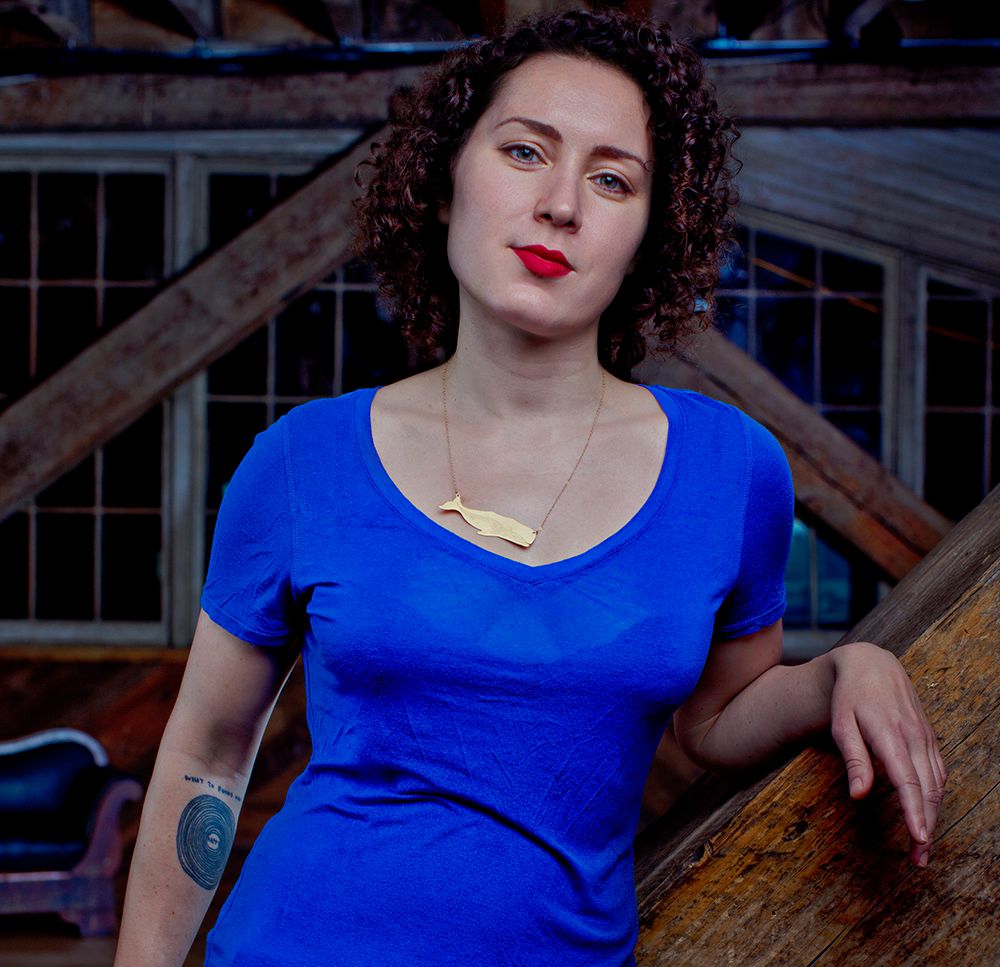
Maria Popova. (Photo: Allan Amato)
SPENCER BAILEY: Hi, Maria. Welcome to Time Sensitive.
MARIA POPOVA: Hello! So happy to be here.
SB: I wanted to start with something you write about time and inheritance in your new book, Traversal. You write, “We are composite creations of our genetic and cultural inheritance, shaped by the biological ancestors chance has dealt us and shaped equally by the spiritual ancestors we have chosen for ourselves.” I’m struck by this notion of “spiritual ancestors.” Could you talk a bit about that notion and also how you came to discover your own spiritual ancestors? Maybe share who your spiritual ancestors are—a few of them.
MP: First of all, we all are shaped by conscious and unconscious chosen ancestors. We carry so much ideology we don’t even know we carry. Descartes, the single-most harmful man in the history of our species, has tainted all of us with this body/mind division and a million other things that we still, four hundred years later, live with without knowing. In a sense, he’s a kind of negative ancestor. But we also forage for guiding spirits, especially those of us who haven’t really had that in our family of origin. We spend our lives trying to be taught how to live, and we look for the people who can do it for us.
I had to find my own. I came to the U.S. alone at age 19 with so much hope and confusion and all kinds of things. I came for the promise of the liberal arts education model, which, by design, is supposed to teach you how to live. Instead, I found myself in this industrialized factory model of minds where you’re taught how to do standardized testing, not how to live. I didn’t know where to look. I started going to the library at random, pulling out Aristotle and Susan Sontag, who I’d never heard of, and slowly started assembling this—my friend Alan Lightman, he’s a physicist, he calls it a “retinue,” which is from his Buddhist practice—coterie of people who helped me grow up.
SB: I love that. I also love this notion that you explore a lot in your work, which is this idea that humans are “motes of stardust,” as you’ve put it, and that character is just “the vapor of chemistry and chance.” In a way, the connective tissue of the ideas that you unfold, the relationships you build, your spiritual ancestors, become a part of you through the reading, through the engaging. It’s a different way of thinking about education, I think.
“We live in the century of the self, and it’s just so tedious, to be that self-involved.”
MP: Yeah. I think it’s also so countercultural yet important to keep deconditioning this clutch of the self. We live in the century of the self, and it’s just so tedious, to be that self-involved. We are a composite creation of so many things that will postdate us, that pre-date us, and it’s boring being so identified with our chance variables that happen to be us right now.
SB: There are two spiritual ancestors of yours in particular that I wanted to bring up here—both of whom play a major role in your new book: Mary Shelley and Walt Whitman.
MP: Mmm.
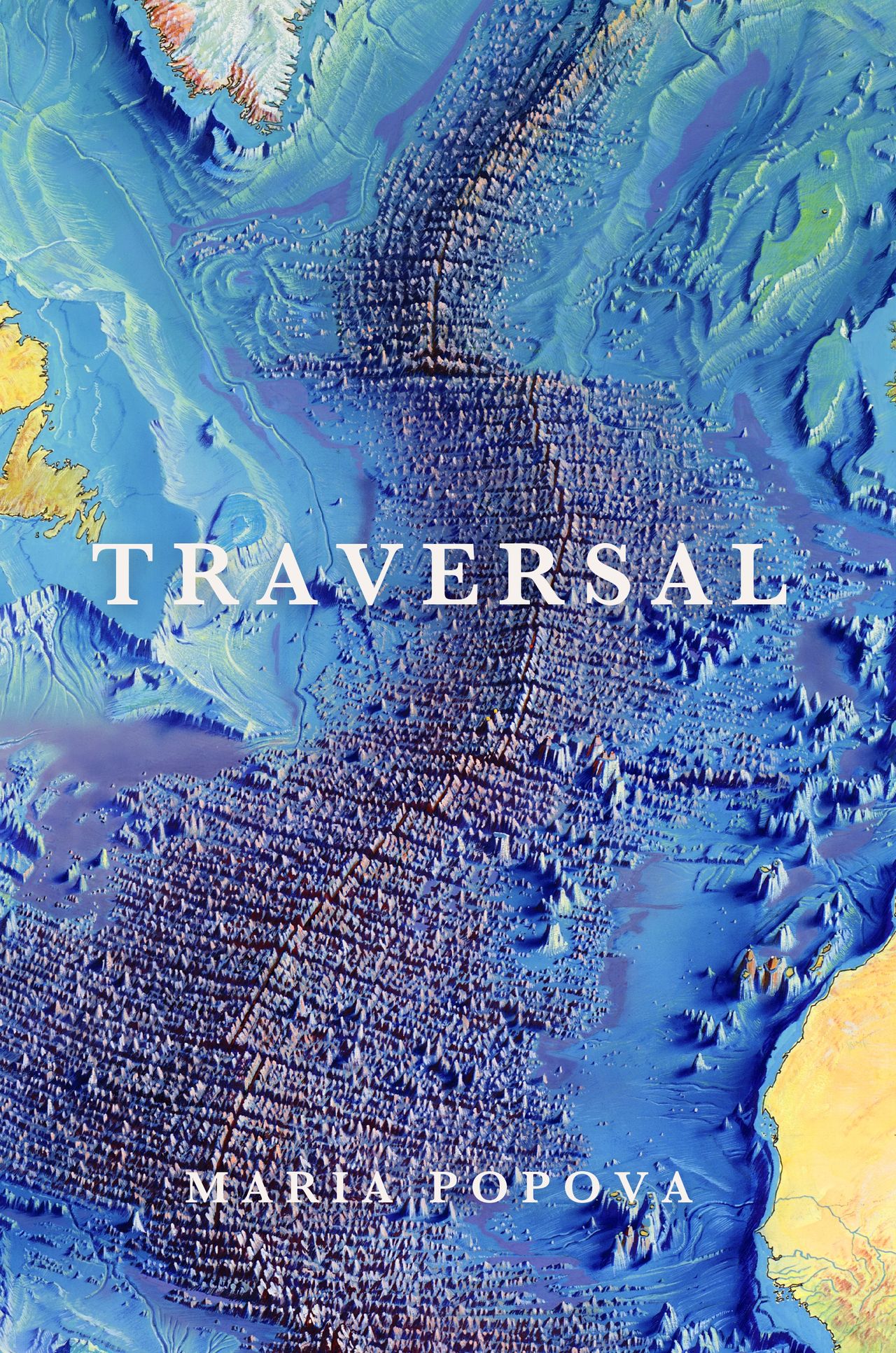
Cover of Popova’s Traversal (2026). (Courtesy Farrar, Straus and Giroux)
SB: Let’s start with Shelley. In Traversal, you described Shelley as someone who “wrote herself to life” through poverty and repeated loss and upheaval. Do you think writing can alter a person’s relationship to time? How do you think about Shelley’s transforming of grief into maybe something more integrated?
MP: That’s a very optimistic way of looking at what she did. Maybe—maybe. I think our perennial tragedy is living in time and not against it—that every time we try to live against time, it doesn’t quite work, and it’s just more grief and more pain. I don’t know that writing necessarily changes your relationship to time, but perhaps, because I was going to say it helps you befriend it, which could be a change if you are against time.
But for me, and why I relate with her, I think, there are people who discover that writing is our best way of metabolizing our own lives, our inner lives, our loves, our losses, our confusions, our quickenings of mind just take shape best, most easily, in writing. I think that’s what she did.
SB: You use or reference, again and again, Frankenstein, her novel. You describe it or position it as the “unresolved intersection” of science, morality, I would say, ambition to an extent, and even human nature. These are all questions that we keep revisiting, we’re still revisiting, always revisiting. Does this explain why Frankenstein’s been such an enduring piece of art? Why do you think these ethical questions continue to persist so much across time? Why does so much remain unresolved that she’s exploring in the book?
MP: I think all the greatest, most enduring, most eternal works of art have to do with the limits of our humanity, the limits of consciousness, the limits we keep colliding against just by the nature of our creaturely endowment.
Frankenstein raises very fundamental questions that had different shape in her time. That was the time when people were asking: What differentiates organic and inorganic matter? The vitalism debate, this notion of the vital spark, this thing that is irreducible that cannot be discovered by the anatomists that makes a creature a soul. Now we’re asking very similar questions about A.I. We just have different terminology. The word soul is deeply unfashionable right now. But if you actually peel back the layers beneath all the A.I. debate, it’s really asking, not is it sentient, but can it feel? Can it suffer? Can it create art? These are questions about what used to be called “soul.”
SB: I imagine Frankenstein logic applied to A.I. That’s an interesting conversation.
MP: Of course. That is a large reason why I wove it into Traversal, which has a lot to do with these questions of how do we use science to discover truth without letting power hijack it for other purposes.
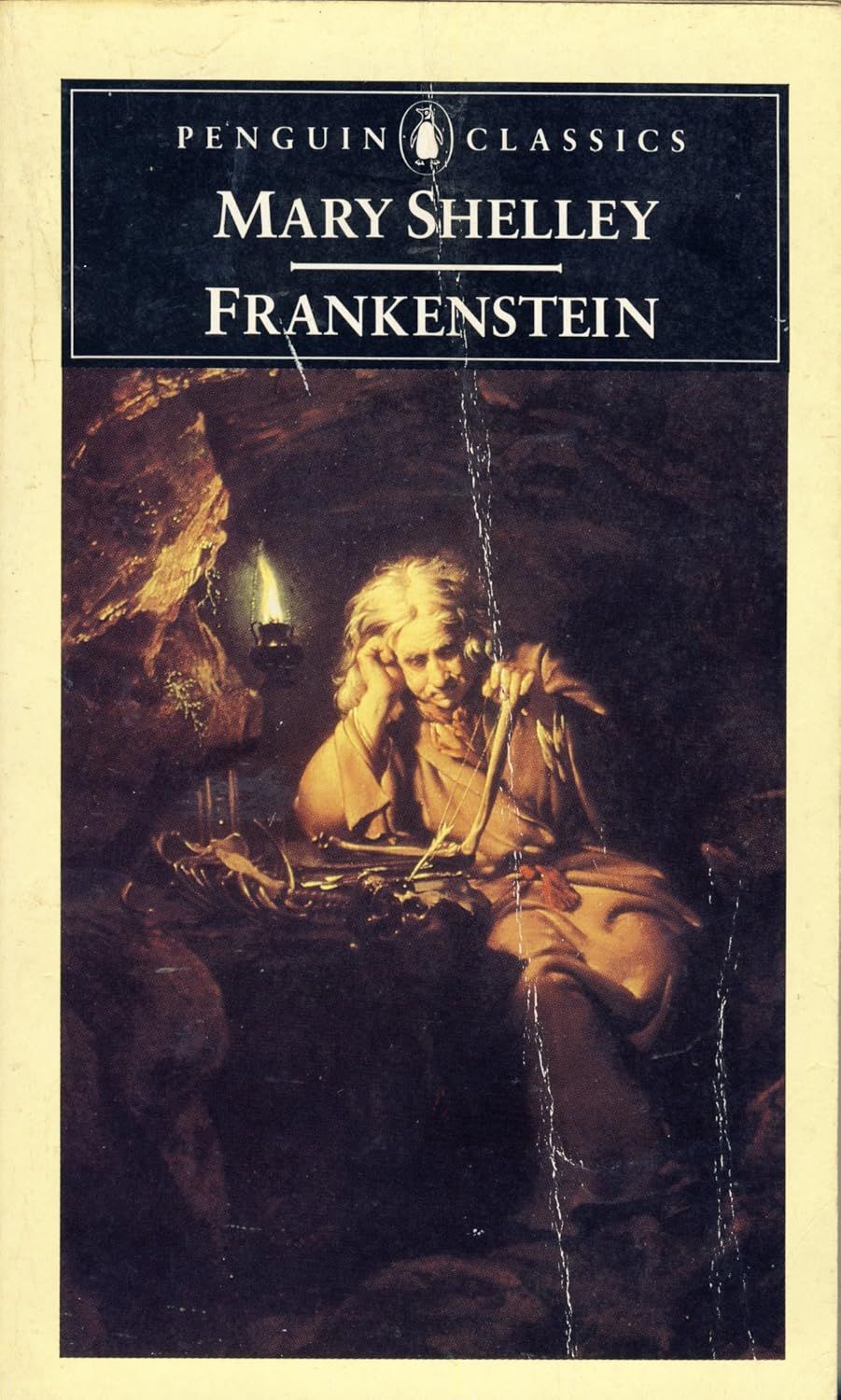
Cover of Mary Shelley’s Frankenstein (1818). (Courtesy Penguin Classics)
Frankenstein is actually least appreciated for its most subtle, most profound question, which is: What does it mean to be a parent, a creator of a new life? What is the responsibility that comes with making a life form, human or not?
SB: Alright, let’s turn to Whitman. He was a poet who seemed to hold an unusual sense of temporal scale. [Laughter]
MP: “My foothold is tenon’d and mortis’d in granite… And I know the amplitude of time.”
SB: Exactly. Yes. While also remaining, I would say, radically attentive to the present moment. What do you think allowed him to move so fluidly between these two modes, one of eternity and the other of immediacy, or the ancient and the urgent?
MP: I think he didn’t hold time the way we do. He held it more in the difference between Chronos and kairos. Particularly, Aboriginal cultures of Australia and New Zealand had a very different model of time that is very similar to how he looked at it, not linear, but a plane, a field, a locus of points.
When he wrote, in “Crossing Brooklyn Ferry,” probably the greatest poem ever written, “What is it then between us? A hundred years hence, two hundred years hence. What is it, then, between us?” It’s not time; it’s something else, because time is a plane that we are positioned on, but there isn’t that much difference between what he called the present and what to him is his future, and his present is our past. But maybe it’s all just one plane.
SB: Which also is the dissolving of the ego.
MP: Yes. Although a big part of why I was so fascinated by Whitman is that he really... There’s this, at this point, trite line of his that everybody quotes, “I contain multitudes. Do I contradict myself? Yes, I am both. I contain multitudes.” But he really owned— We all live with these parts and the part making the promise, making the choice is not the part keeping or breaking the promise, living with the consequence of the choice. We’re so partitioned, but we don’t own it the way he did.
What interested me about him is that, on the one hand, he wrote so I think genuinely about waiting to be the uncombed grass of graves. He accepted death as this atomic reality. He was very influenced by this woman, Frances [“Fanny”] Wright, who brought in the atomism of the ancient Greeks. On the other hand, when he began approaching death, he spent thousands of dollars he did not have on tons, literally tons, of granite to build this elaborate tomb to immortalize the ephemera of the body. Both were true for him.
SB: In Traversal, you describe Whitman as “searching for a grand unified theory of being" where even the present moment becomes,” as you put it just a second ago, “an atom of eternity.” Has your own relationship with time changed through engaging Whitman’s work? You’ve spent a lot of time with his poetry and thinking about his writing.
MP: I think it’s more the other way around. I gravitated toward him because his experience of time is consonant with mine or with how I would like mine to flow in my being.
SB: Which also connects to this interconnectedness idea. I think both your practice and his practice were really about the interconnectedness—or are about the interconnectedness—of all things across time. This idea that there’s unity in everything. In the book you describe—and I want to quote here, because I loved this part, a human as—“a festival of particles and probabilities, a living question, a perishable miracle composed of chemistry and culture of passion and change.”
MP: Chance.
SB: Sorry. “Passion and chance.”
MP: Very important. Yeah. Change is the underlying, but the role of chance is so underestimated again in this age of self, right?
SB: Tell me a little bit about that, how you think about chance, this role of chance, also in your work and how you discover things and—
“We are each of us accidents of chance.”
MP: Oh, tremendous. First of all, we are each of us accidents of chance. Had one atom fallen one way or not another early on in the big bang, in the whole Rube Goldberg machine of events, had your one parent gone to bed with the other parent on a different night, on a different minute or a different second—so much chance. How little choice we have in the body, the brain, the neurochemistry, the era we’re born into. And yet so much of identity trades in these variables that we did not choose. I find that such a prison. It is such a prison that we live in on the scale of a civilization now.
SB: Yeah, the odds just from a chemical level, if not a physical one as well, just thinking about every choice each of our ancestors made that led to us being here.
MP: And even were they choices for them, too? Were they forces of circumstance they adapted to that look in the hindsight as choice?
SB: I have an ancestor who I know about [Edward Doty] who participated in a duel and survived the duel. [Laughter] It’s wild to think that I’m here because he survived this duel.
MP: Freeman Dyson, the physicist, has this deeply moving story in his memoir [Maker of Patterns: An Autobiography Through Letters] about his father. His father’s best friend was engaged to his mother, but he was a very tall man. In the trenches of World War I, he rose up to look and he got shot. Then the fiancée fell in love with the man who became his father, and he was made because of a biometric problem this other man had that had him killed.
SB: The odds. [Laughter] I like what you note about time in chapter five of Traversal, which is titled “Time Takes the Space It Takes.” You write, “The calendar—like money, like countries—is a figment of the collective imagination, imagined by a series of consensuses. The loom of the universe goes on weaving the fabric of spacetime, indifferent to our metrics, our consensuses and conflicts.” It’s beautiful.
MP: I don’t know if it’s beautiful, but it’s definitely true. [Laughter]
SB: I think I haven’t had enough physicists on the show. I need to have more physicists on the show.
MP: Please. It’s interesting, physicists—particularly theoretical physicists—are some of the most imaginative people you will ever meet, because essentially they have to create little fiction models in their minds that they then, unlike novelists, test against reality. But because the imagination is so powerful a force, a lot of physicists are great novelists. Alan Lightman? His novels? Oh, my God.
SB: Makes a lot of sense. And across your work—which echoes the [Jorge Luis] Borges stance of “time is a substance I am made of”—time seems less like this neutral backdrop and more like almost a form of identity. I don’t know if we could call it that. But…
MP: Hmm.
SB: I was thinking about this, and I didn’t even know how to frame this question, but it’s something along the lines of: If it is a form of identity, as something that we become through memory, attention, even transformation or change, Do you think of the self as fundamentally temporal? Are we time? Is time us?
MP: That’s such a profound… Sorry, I’m still stuck on time as a form of identity. That is a profound paradigm because actually, if we think of entropy as the measure of time, right? Entropy is the reason time exists or time is the reason entropy exists.
Identity is a rebellion against entropy saying, “I am.” Not “I was, I will have been,” all the tenses that denote the dissolution of self, which is mortality. Identity says, “I am.” So it’s almost a denial of time, and yet it has to exist within time. It’s almost like this layer of fiction superimposed over the substrate of reality that is our temporal nature, which has changed. What makes you and your childhood self the same person despite a lifetime of physiological, psychological, social, cultural change? Who is that? [Laughter] No, it’s a genuine question. Do you know? I don’t know.
SB: I don’t know. I don’t know. Then it makes me even more fascinated when you think about the body in this equation, the body as a map of time of who we’re becoming, where we’ve been. Hard to process all that. [Laughter]
What is it that you think that first drew you to these writers and these scientists and thinkers who treat time, I guess, not so much as an abstraction, but as something perhaps deeply personal or lived or even existential?
“I think we’re all just trying to bear our mortality, and we give that struggle different forms.”
MP: I think we’re all just trying to bear our mortality, and we give that struggle different forms: religion, poetry. Making of time a material rather than an enemy, that might be one measure of creativity actually. The people who are most creative in an objective sense—meaning they make things, they put things into the world that touch other people’s lives that affect transformation in other interior lives—are people who have used time in a certain way as the material for that work.
SB: Who comes to mind for you when you think about that?
MP: Obviously, Whitman. First of all, poets in general. Poetry is made of time. It’s made of rhythm, and it’s made of transformation. A good poem has a turn. It starts one place. It has a turn. It leaves you in a different place, and in a very short amount of time, you’ve undergone a transformation. Poets are the ultimate shamans of time.
SB: Maybe songwriters, too. I know you’ve referenced Nina Simone and time, for example.
MP: Yeah. This is actually not her song. It’s really one of the most existential songs ever made, but she performs it in a way that is— Her voice is made of time, made of time and eternity.
SB: I wanted to touch here on the title of your book, Traversal. What have you learned about yourself through this act or these acts—plural, I should say—of Traversal, moving through books, ideas, geographies?
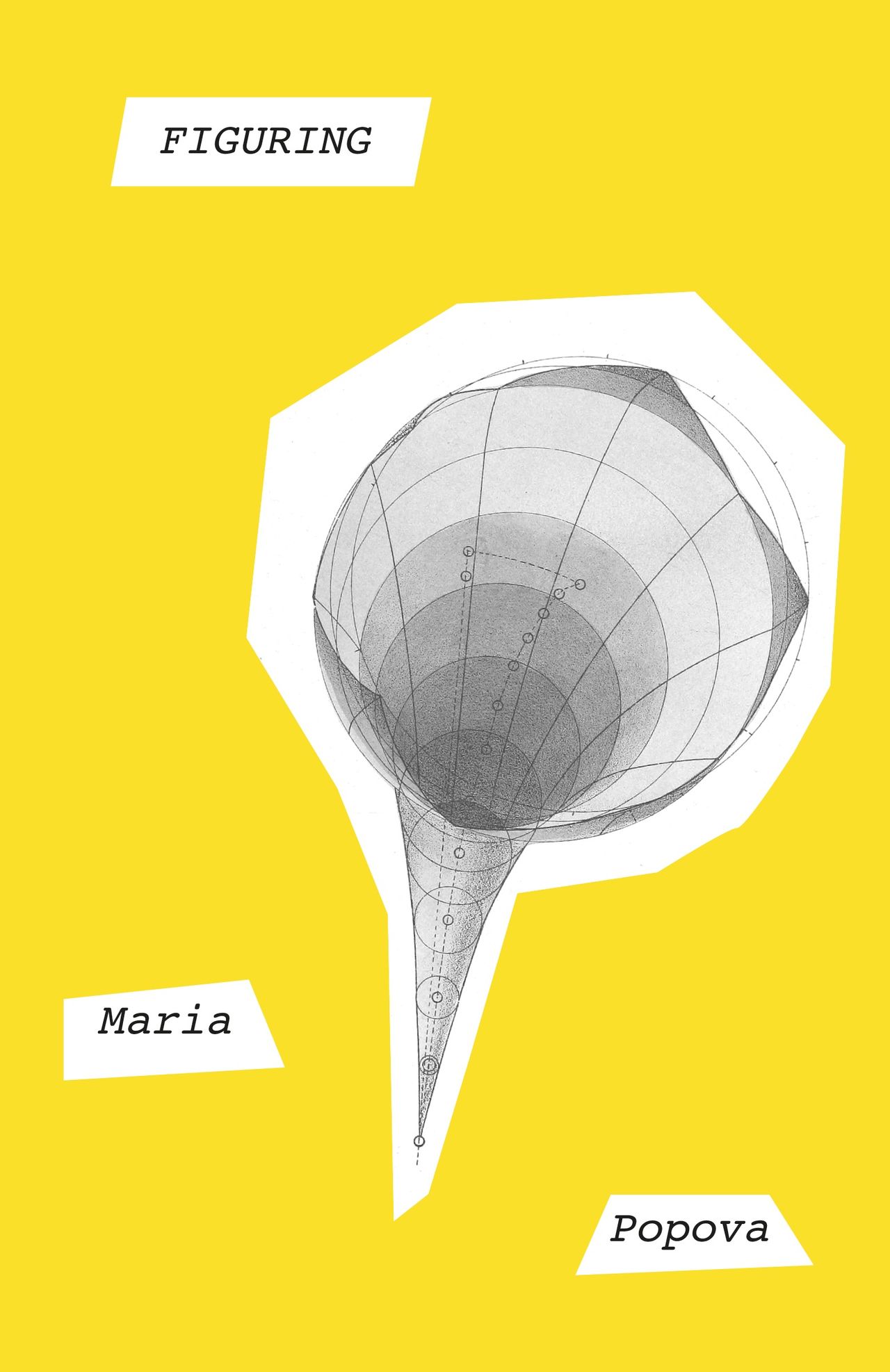
Cover of Popova’s Figuring (2019). (Courtesy Pantheon)
MP: Well, this took seven years, beginning to end, and I did not know who was going to be in this book when I started. I knew maybe three of the dozen people. I didn’t know where it was going to take me. I just knew I had to process my life. About midway through, my wonderful, wonderful editor Dan Frank [former editorial director of Pantheon Books], who edited my first book, is the reason I even made... I don’t need to make books. I like writing. I have other ways to write, but I made my first book, Figuring, into a book because of him. Working with him, having another mind, another consciousness really takes you out of yourself, takes you far beyond where you can go. He was an extraordinary person. He was John Berger’s editor, Renata Adler’s, many, many wonderful writers that I loved. I very much started Traversal for the sake of having this conversation with him. He, midway through, got very sick, very suddenly and died very suddenly.
I hoped to finish as a gift to him. I never even cared at this point about publishing. When he was going through chemo, he called it his medicine. He said, “Send me more of my medicine.” I was writing so fast to keep sending him pages, and then he died, and I was about three hundred pages in. I was like, “No Dan, no book. That’s it.” I put it away. I was grief-stricken for two years. Every time I thought of it, I just couldn’t... Then, eventually, my friend Jim, who’s one of his authors—James Gleick—who knows how to manipulate me, he said, “What would Dan want?” [Laughter]
Then I got connected with my now wonderful editor, Eric Chinski [editorial director of nonfiction at Farrar, Straus and Giroux/Macmillan]. I met with a number of people, and I just needed a very strange, unusual person… The reward for me is the process. I ended up writing the remaining three hundred and fifty pages in a totally different era of my life, in a totally different context. It was this Frankenstein-ing of the book itself.
SB: Wow.
MP: It completely changed where it went, because now these questions of life and death had a completely different meaning.
SB: Wow, what an experience. You feel this propelling force as you’re reading the book. I don’t think the average reader or any reader would probably pick up on the Frankenstein element of the book, other than the actual writing of Shelley’s novel that you do so beautifully.
MP: There’s so much that’s invisible about the lives of writers. This is partly why I immerse myself in the lives of these people of whom all we know... What a shame that all the world knows of Mary Shelley as the novel she wrote at age 18 and a half. I do reference Frankenstein a fair amount, but I also make a real point of putting the full context of her life, her other work... What made that book possible and what that book made possible then for her life—so much is invisible that is the substance of the art.
SB: I mentioned Shelley, and Whitman because I view your book as a portrait of each of them. In a way, it links them across time. It offers a way of reading each of their works that if you were reading a straight biography of them, you would never get. I think what’s fascinating—just to go back to the Traversal title—I feel like it’s traversing all of this terrain that, as the reader, we really get to live in your mind a little bit.
MP: Can I ask, I’m so curious, because there are many people in this book, on the loom—that is, many threads—and I’ve found most people do gravitate to Whitman and Shelley. What is it for you that is these two and not the others?
SB: [Laughs] Yeah. I should tell the listeners here. I left out many, many voices. There’s dozens of different people from across time, scientists, other writers, other poets, other thinkers. I think it was… I think I’ve long had a mental attachment, maybe a spiritual ancestral attachment to Whitman. Then, Shelley, I’ve never read Frankenstein. Guilty. And I— [Laughter]
MP: When you do, please read the 1831 edition, not the original.
SB: Okay. I, of course, knew who Shelley was, but I didn’t have much beyond that. For me, it was an introduction to her work and her world. I found that the way that you write about her, it melts into the book. It transfuses so much of her life into the lives of the others that you’re writing about in a way that I kept thinking about her. I don’t know why. I guess the same is true of Whitman. Although I think with Whitman, you also end the book on with Whitman—or there’s a lot of Whitman toward the end. Maybe that’s why he was so much on my mind.
“I love that, how unknowable people are, the living and the dead.”
MP: Yeah. It’s so interesting. I don’t write biography, but I really absorb all I can of their lives. For Mary Shelley, we’re talking two hundred years’ worth of material. I read seven biographies, all four volumes of her surviving letters; the Clairmont family’s, her stepsister’s family’s, letters. Of course, all of Percy’s letters. You still get such a partial glimpse of a person. Even when you absorb all that survives of them, all you get is a little, little glimpse. I love that, how unknowable people are, the living and the dead.
SB: Stardust.
MP: Stardust, but also that is why we make art, to reach across that abyss between one consciousness and another, which is always an abyss. Even between lovers and the parents and children, it is always an abyss.
SB: I think this is a good moment to turn to your upbringing, actually.
MP: [Laughs]
SB: Could you speak to the genetic inheritance you got from your family, as you see it? Because we’ve been talking about the spiritual ancestry, but what about the—
MP: In what sense? Genetics touches so much.
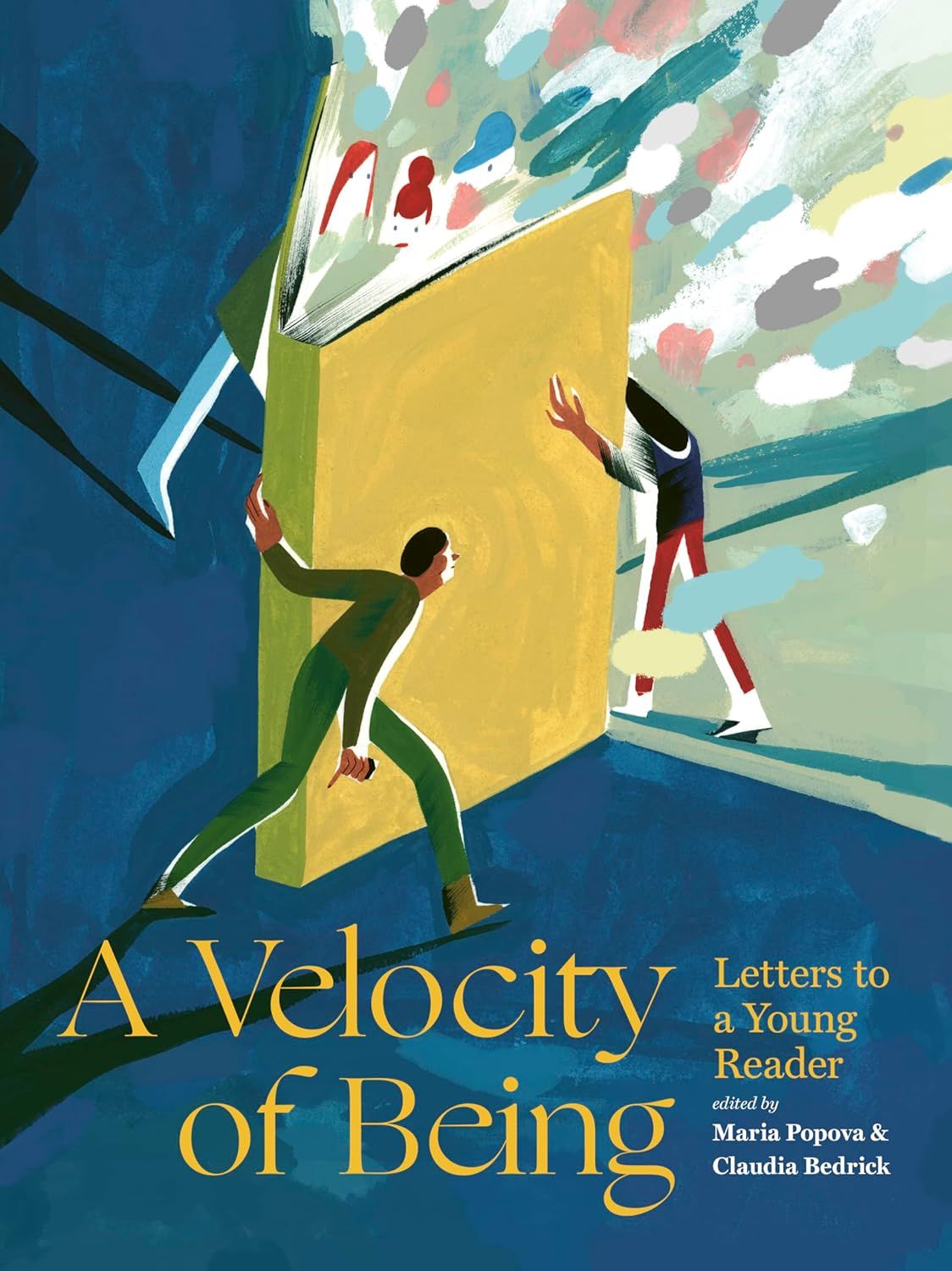
Cover of A Velocity of Being: Letters to a Young Reader (2018), co-edited by Popova and Claudia Bedrick. (Courtesy Enchanted Lion Books)
SB: We could go in a lot of different directions here. There’s the fact of the actual environment you grew up in, but I guess we could get into your parents. I know your paternal grandfather was a big reader, right?
MP: Grandmother. She still is, yeah.
I grew up in Bulgaria. I was born during Communism. My parents were unacceptably young. I was raised largely by my two sets of grandparents, which meant my two grandmothers, who are polar opposites. One of them, who is going to be 92 this year, was, until recently, the only religious person I ever knew. She still prays. She believes in God, the whole thing.
The other one is an engineer, atheist, heavy reader whose library was my playground. I think there was something very interesting about being... I was constantly sent from one to the other. I had no continuity in my childhood. So I was shipped away, brought back, shipped away, brought back. I went from wild outdoor nature—because my religious grandmother lives in the Bulgarian countryside, and much of my childhood, she was an elementary school teacher stationed by the Communist government in extremely remote villages in the mountains. I was unattended. I ran the fields. I was chased by a wild boar. I tried to ride a turtle.
Then, in the city, it was the opposite. My other grandmother is very, very anxious. Who can blame her? She had bombs fall on her when she was 4 years old, captive. The measure of a person being their intellect, completely the opposite. I had the life of the body in the country and then the life of the mind in the city and unsure where the self is.
SB: In Traversal, you write of parents. “Our parents may break our hearts, but they shape our spirits, the contours rendered starkest in times of crisis, when all we have are our primal reflexes.” Does that resonate for you? Is that— ?
MP: I mean, who wrote that sentence? [Laughter]
My parents, as all parents, did the best with the cards they were dealt. That’s it. My father, by contemporary standards... He hardly speaks. He’s very, very shut in, cerebral, has weird knowledge about submarines from the 1970s. Very classic that kind of person. And my mother was when I was growing up very violent, very explosive, unsafe in many ways. Between the two of them, it was not ideal in some ways.
“Every artist’s art is their coping mechanism for whatever it is they survived or are living with.”
But I think every artist’s art is their coping mechanism for whatever it is they survived or are living with. And I can begrudge that and still have the life I have because I have the life I have because of that.
SB: Well, maybe this is a reach, but one of the things I found interesting to learn about you and your background is that you were a recreational bodybuilder.
MP: [Laughs] I competed in college briefly.
SB: On the surface, it may seem so far from the world of The Marginalian and what you do as a writer and reader today. But I think the way you work is so disciplined, so rigorous. It’s like this form of repetition. Do you see a throughline there?
MP: That’s definitely one. Bodybuilding, I would not recommend. It’s a very unhealthy sport. It is the broadcasting of self-restraint and discipline, performative discipline—bad idea.
SB: [Laughs]
MP: But I will say I started doing it because I had come from the ninety-nine percent of Bulgaria to a school that was the one percent of America. I thought I had America down because of movies. I was so not prepared for this level of privilege, this level of just— I did not relate at all. I was working four jobs to pay my way through college, and these kids were partying.
I went to— There were different kinds of workshops to try different recreation or, what is it called, extracurricular things, and the bodybuilding group were all the weirdos. In hindsight, we are now called queer people, and this term didn’t exist at the time, but the marginal people. I’ve always felt marginal to my time, my place in Bulgaria, here, everywhere.
It was something about being in a tiny group of people who also felt like they weren’t quite supposed to be there. The discipline was one aspect, but very much this underlying spirit of [the] marginal.
SB: That is a direct connection to The Marginalia.
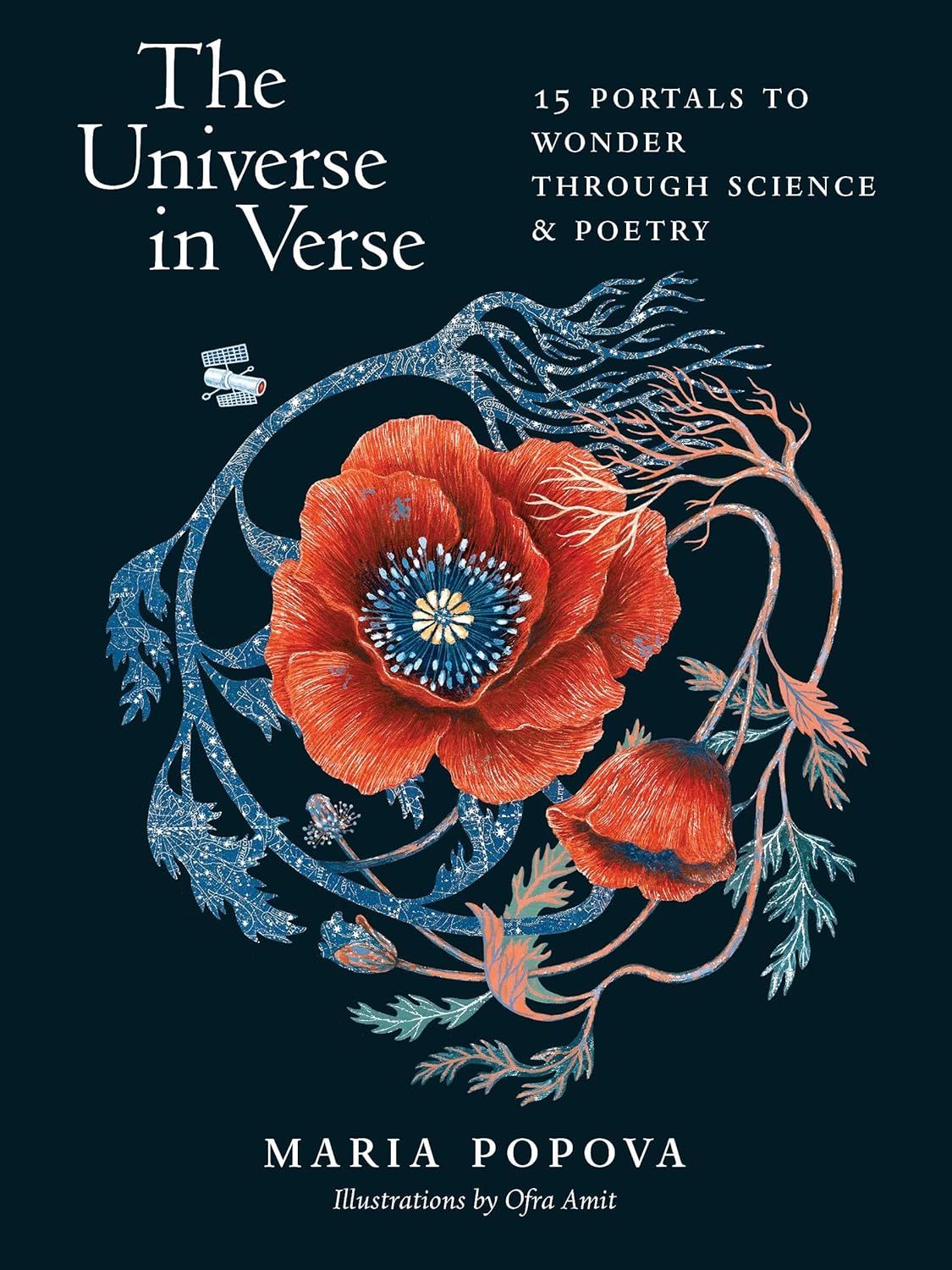
Cover of Popova’s The Universe in Verse (2024). (Courtesy Storey Publishing)
MP: Do something with it. Emily actually died on the day my first book, Figuring, was published, which was dedicated to her. By that point, poetry had become very integrated with my life, and I started to see the ways in which it helps us live that is similar to science, this kind of “unselfing,” to use Iris Murdoch’s wonderful term, stepping out of ourselves into something larger that is the universe within, the universe without, this conversation between the two. I ended up doing this show for a number of years called The Universe in Verse that used poetry to bring people into the world of science and vice versa. I would invite people who are not usually poets—actors, musicians— to read a poem that I choose that has some element of science.
Then I would talk the science. Patti Smith would read a Rebecca Elson poem about dark matter, and then I would talk about Vera Rubin and discovery and confirmation of dark matter and how galaxies work. This was right after the first Trump election, when the arts were being defunded, when alternative facts were happening... I loved this portal into reality that both these instruments provide us with and that also help us bear all the uncertainty we’re living with.
SB: Thank you for sharing that story. Since we’re on the subject of poetry, I also wanted to ask you about pottery.
MP: Oh! [Laughter]
MP: I renamed my site fifteen years in because I realized, looking back, that a lot of what I write about are ideas from the margins of their time that ended up really shaping the future, and people who were “other” enough by some variable that they gave themselves permission to go against the status quo—the marginal people who drove the world forward.
SB: You just framed exactly what I wanted to ask next, which is that The Marginalian, I guess, since 2021 called The Marginalian—the first fifteen years, it was Brain Pickings.
MP: Oof.
SB: Yeah, I know. [Laughs]
MP: I know. It’s terrible. I was 21. Come on. In Bulgarian, we don’t really have puns and wordplay. Very little. Then I was so thrilled about all these idioms and—
SB: Pick my brain? What? [Laughs]
MP: I know. Oh my God. It’s terrible. 21 though. Who wants to be held to their aesthetic standards at age 21? [Laughter]
SB: Time, duration, these are things that you explore a lot with The Marginalian. This fall it will turn 20. How are you thinking about two decades of this project? How are you thinking about what you’ve learned and the information that you’ve gathered, accrued, linked?
MP: In a sense, it hasn’t changed for me. I have changed. But in relation to me, the process hasn’t changed. It has just followed along with my change. It is how I metabolize my life. I’m still learning how to live, and I’m doing it in writing.
SB: What do you think this work you do… which is very much of the internet, but so much of it’s removed from it, as well. How do you think about this idea of —
MP: I try not to.
SB: Because we live in a world where information is just optimized. Everything’s about speed rather than depth.
MP: Right. Very, early on, I decided I wasn’t going to do things the way they’re done. Not out of any kind of, “Oh, I’m just going to be rebellious.” But because I, as a person on the internet, did not like much of the experience the internet had to offer, including advertising.
“It’s not about information. It’s about illumination. We read for illumination. No greater amount of information is going to help us become better humans.”
I was like, Why would I perpetrate on other people the thing that I very much hate? I have never had advertising on my site. I have not really at all gotten seduced by the clickbait thing because you know what it is? It’s not about information. It’s about illumination. We read for illumination. No greater amount of information is going to help us become better humans. We know it all. More or less, the basic parameters of how to be. It’s more the illumination. Where is that? Where is that coming from? As you say, we live in a world that has pragmatized every littlest thing. The wonder of the universe has been reduced to the practical use of scientific discoveries. The symphony of feeling has been reduced to the whole music of self-help. [Laughter]
SB: Yeah. I hope I didn’t offend you when I said that you gather information—
MP: No.
SB: —but what you do that I think is so beautiful is you make information illumination rather than just present information.
MP: Thank you. Or maybe just simply share what has illuminated me in some way that I have learned, which is a process of integrating information into your existing framework of knowledge, but then this transmutation has to happen, when there’s more than being informed—you’re transformed.
SB: You’ve described literature as an “analog internet.”
MP: [Laughs]
SB: It’s a concept I love. I’m sure the listeners do, too. You view yourself as much a writer as a reader.
MP: Well, I never wanted to be a writer. I never thought I was a writer until I looked back and realized I’d written tens of thousands of pages of writing.
SB: [Laughs]
“This combination of chance and choice, I find very fertile. That you have to be open to the chance events and then choose to pursue the tentacle, to stretch the tentacle to see what it’s going to grab.”
MP: You asked earlier about how I discover my spiritual ancestors. Every allusion, every footnote in a book, is a hyperlink to an older text. So much of what I’ve discovered is because somebody made a passing mention in the footnote or in the postscript of a letter that got me interested in who that person was or what that book was. Then I went and got it. Then in it, there was a reference to some other thing. This combination of chance and choice, I find very fertile. That you have to be open to the chance events and then choose to pursue the tentacle, to stretch the tentacle to see what it’s going to grab.
SB: Yeah, traversing. [Laughter] You’ve become an expert, I would argue—maybe you don’t agree, but you might...
MP: I’m so curious where this sentence goes because I don’t feel like I have an expertise in anything.
SB: In merging poetry and science. The way that you think about them is maybe not distinctive to you, but you do it in such a way that has really shaped, I think, how a lot of people from one field or the other come to find each other. You’ve described both poetry and science as “instruments for knowing the world more intimately and loving it more deeply.” I think that’s what we feel when we engage with your work. Was there an “aha” moment for you as you were coming up, following your nose, the trail of interest in these two fields, the verse and the universe?
MP: I come from the world of science. I did very intense mathematics for quite a while when I was quite young, and never quite got a proper education in literature. Well into my twenties, I did not like poetry, meaning I didn’t understand it. Like most people who are not literate in a form, I dismissed it. The way we tend to dismiss what we don’t know how to use—we call it useless. Then, across the aisle on a transatlantic flight, I met this wonderful woman whose name was Emily Levine, and she was a comedian, performer, philosopher of science, extraordinary person. So across the aisle, across our fifty years, half century of age difference, we became very fast friends—
SB: In this liminal space of the airplane.
MP: Much to the discontent of the entire coach cabin on the red eye. Then she was visiting one day. She lived in California, and we went to a little coffee shop in Chelsea—packed. It was Sunday. Somehow we got a table, and she, again, started saying something or other about poetry. I once again rolled my eyes, at which point Emily gripped the edge of the table, rose to her full height of four foot two. and began reciting “The Love Song of J. Alfred Prufrock,” that T.S. Elliot poem that has the line, “Do I dare disturb the universe?”
Then she calmly sat down, and I looked around. People had put down their drinks and were applauding. This is New York. This does not happen.
SB: [Laughs]
MP: I thought, All right, maybe this stuff can disturb the universe a little bit. Then Emily took it upon herself to educate me. She started sending me a poem a day, and she’s someone very versed in science. She read Latin. She was very erudite but very sensitive. She educated me in poetry. Then when she was dying… Running theme here: people who have shaped my life dying. Anyway, the point is Emily introduced me to poetry. But I do want to say something about losing people and Mary Shelley.
A big reason why I wanted to summon her back with us is that, by the time Mary Shelley was 25, she had lost three children, the love of her life, her mother at birth, and her only biological sibling. Can you imagine that? We live in an age of competitive trauma.
SB: [Laughs]
“We live in an age of competitive trauma. We really do need some calibration.”
MP: We really do need some calibration there, and this woman, uncomplaining, made art that touched the centuries. And none of it was victim. Anyway, the point is, losses happen. They are terrible. We survive.
SB: Do something with it.
SB: You started making pots as a daily practice. You’ve described it as a coping mechanism for the confusions and cataclysms of living. You’ve created what you’ve called “urns for living.” Could you speak to pottery within the context of your work, your creative life? What does it mean to you? How does it link up?
MP: I have a very compulsive nature. I am very regulated by a daily thing. It used to be my writing. It used to be The Marginalia, and I would write every day. And then it shifted, because things became longer, took more research. I couldn’t do it daily.
Typically when I am in a state of heartache, I especially need the daily regulator. At some point a couple years ago, I decided… I walked into a studio off the street in Brooklyn. They had an open wheel, and my friend and I walked in. We took the class. It was great. Then they were like, “You can sign up for classes. We have a three-year wait list.” And I was like, “What?!”
Then I found a friend who I knew does pottery to teach me. I started learning. Then I had a very big heartbreak and really struggled with this idea of the tension between holding on and letting go, like where is that dial, and how to do both in a way? Hold on to life. Hold on to the loveliness of what was lost, but let go of something that no longer is. I don’t know how these things happened, but I started making these urns for living that all say... They’re tiny, tiny little urns that all say “Hold On, Let Go,” around on the perimeter. I decided I was going to make one a day for forty-one days and, on my 41st birthday, give them away to strangers, raffle them off.
That is what I did. It’s been very moving to see. I also wrote about this tension between holding on and letting go. I don’t know if people responded more to the writing or to the urns, but it was very moving to see the response. I think that’s something we all struggle with in many aspects of life.
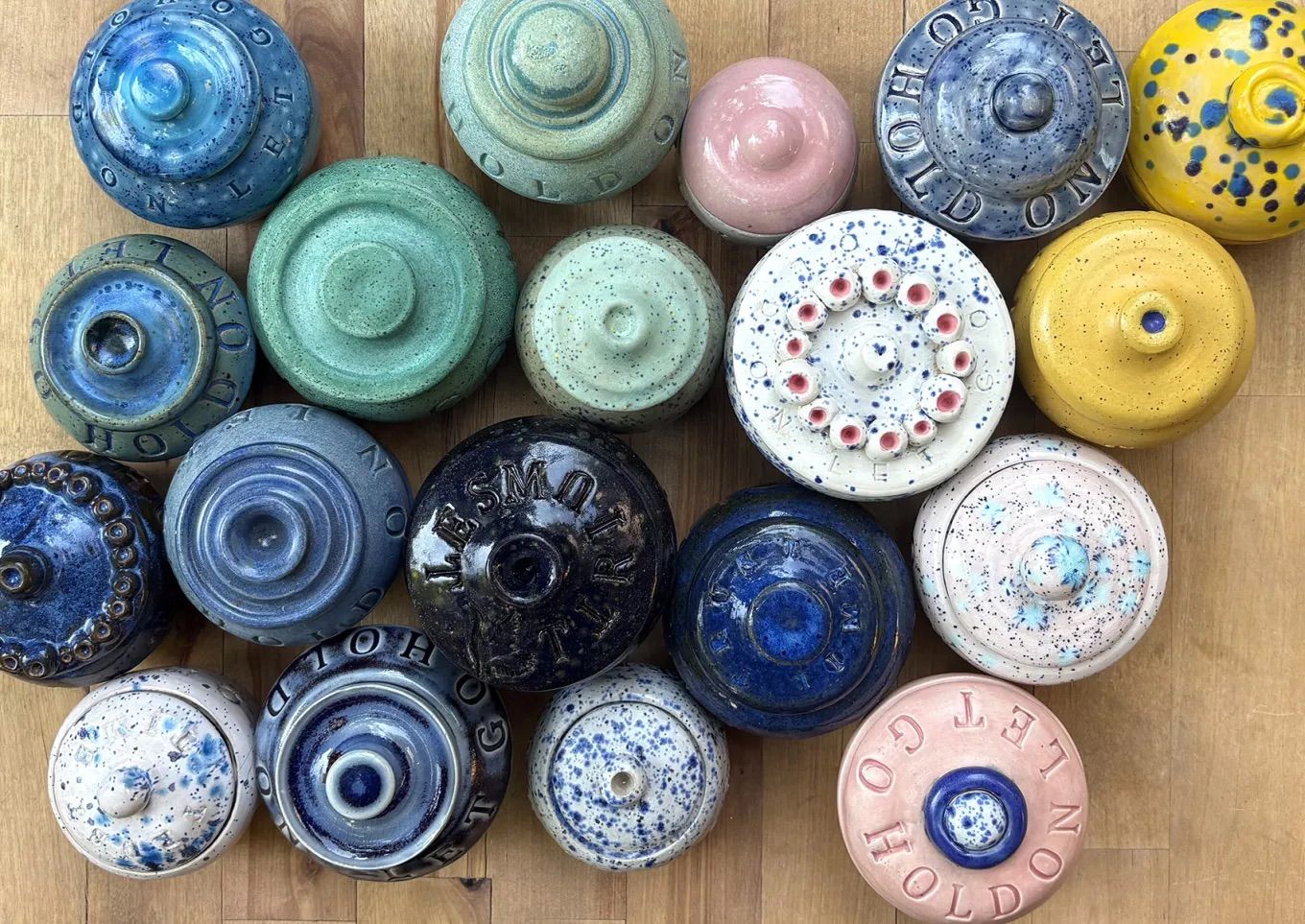
A collection of Popova’s “Urns for Living.” (Courtesy The Marginalian)
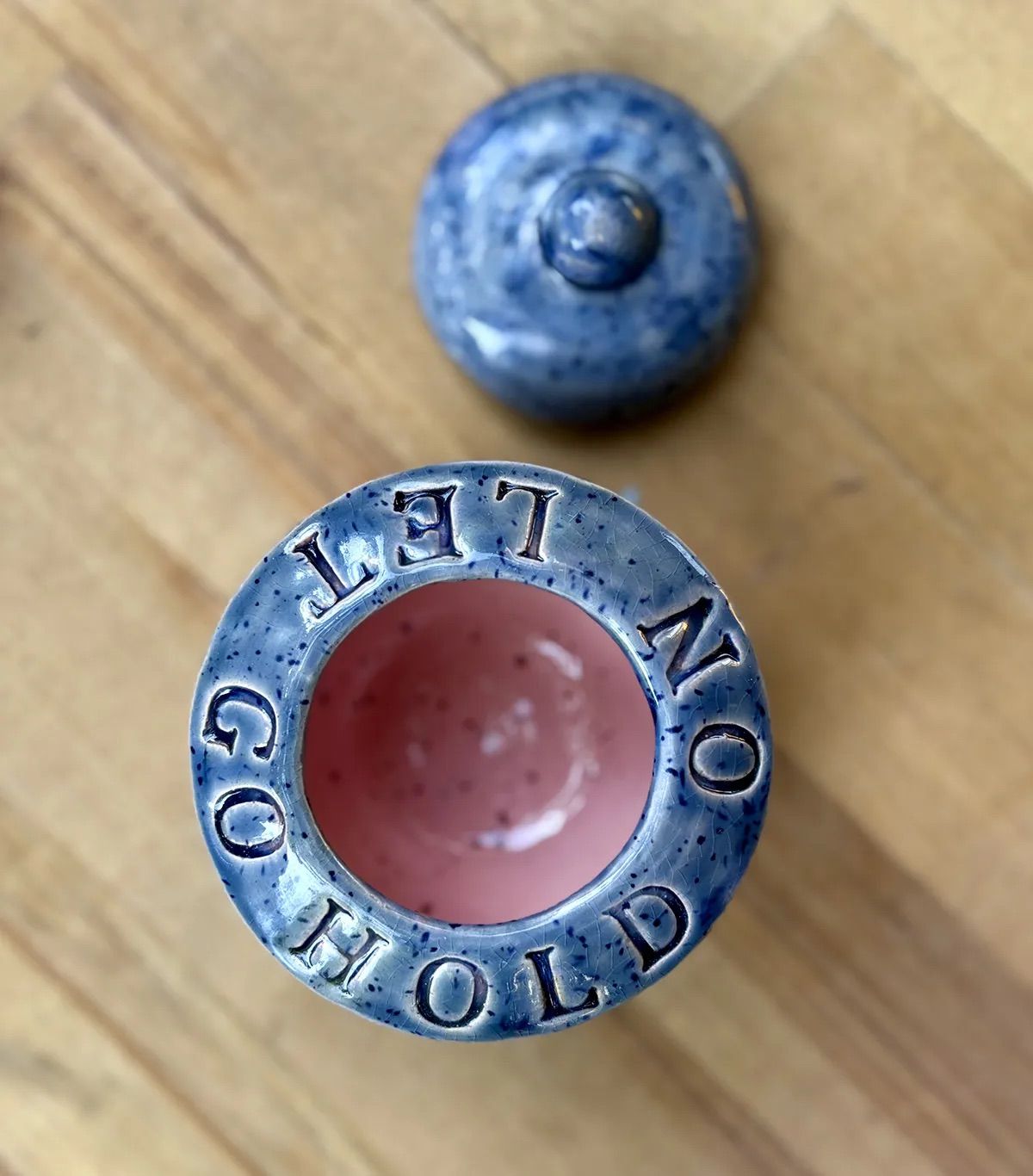
One of Popova’s “Urns for Living.” (Courtesy The Marginalian)
SB: And you’re still making pots.
MP: Now I make bowls with lichen and cut-up texts from my books. [Laughter]
SB: Really combining the writing—the poetry and the pottery.
MP: Yes.
SB: We’ve been skirting around the importance of attention. I think attention is something that ultimately is a core element of your work, if not what your work is really about. Paying attention, deep looking, wonder.
MP: Mmm.
SB: You’ve written that the art of living is the art of knowing what to overlook. I’m curious, in a culture that’s monetizing distraction pretty much, what do you decide deserves your attention? How do you decide what to overlook?
MP: Monetizing distraction by manipulating attention. It’s interesting, the relationship, that our attention is now a currency in somebody else’s pocket and we’re not quite aware of it or at least don’t act like we are aware of it. There should be such a higher level of indignation at how we’re being manipulated.
I think, ultimately, attention is all we have. It’s the sieve through which consciousness perceives reality. Because there is no experience of reality outside of consciousness—there is, of course, objective external reality where the laws of physics play out. But internally, our entire—entire—experience of reality is mediated by consciousness. If attention is the valve through which experience comes in, then why aren’t we much more vigilant over what we let in and how we guard that valve?
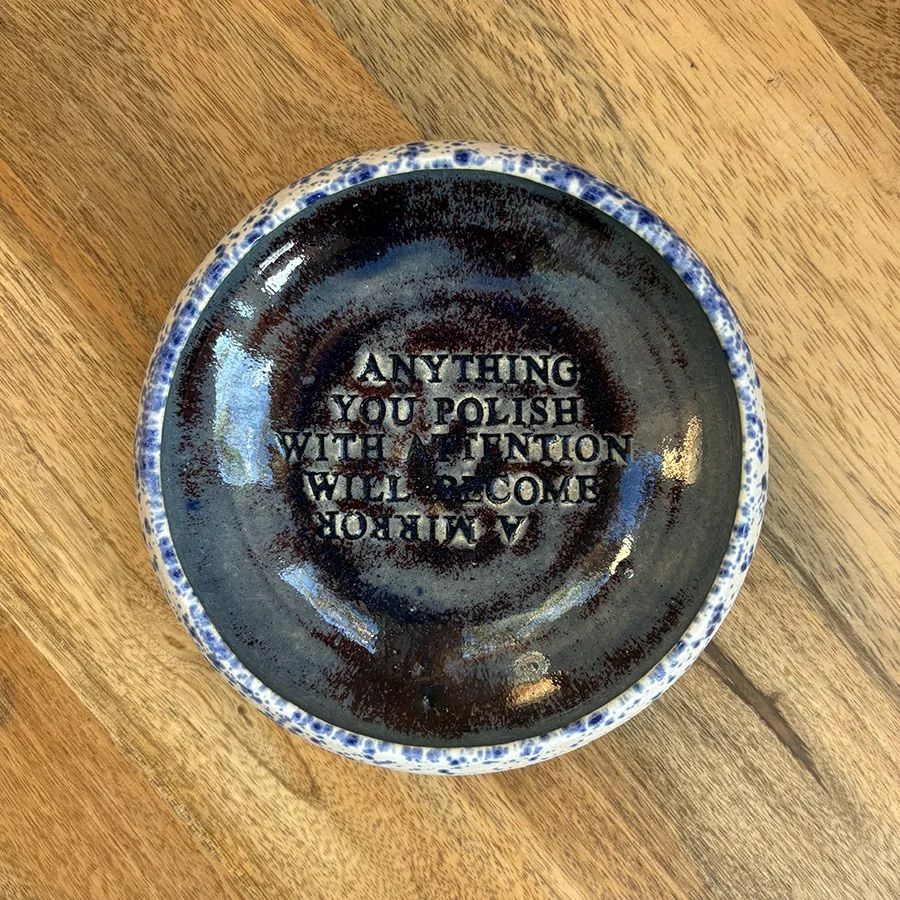
A ceramic bowl made by Popova that reads, “Anything you polish with attention will become a mirror.” (Courtesy The Marginalian)
I think also, we can manipulate ourselves into taking in richer and richer elements of reality by how we place our attention. Anything you polish with attention will become a mirror. Look long enough at a great blue heron or a ghost pipe or a constellation, and you will learn more about yourself than anyone can ever tell you in a book.
SB: Which I feel like is just a mode of embracing slowness, accepting that we have it in our control to approach life in a more considered, slow way, rather than just agree to the speed at which we’re forced to… I think there’s lots of politics involved in talking about slowness, too, but I think we can bring more inefficiency into our lives. Do you think about your practice as one of slowness? Do you think slowness brings its own intelligence out of it? Is slowness even a moral stance these days?
MP: It’s interesting. That is never a lens I have looked at it through, the pace. I’m much more interested in scale. I would say smallness. The cult of scale would live under, of which productivity is a byproduct, right? The more, faster, more, faster is actually a scale problem, trying to scale the moment into eternity—and it’s a losing game—but also the pressure of the internet for everything to always be getting bigger and bigger and bigger and more reach and more this and that. I think we’re losing the depth that comes with smallness.
SB: Go on with that. You have accrued and built a very large following and audience yourself. At the same time, I think the ideas that you explore and tread into are intimate. There’s an intimacy to your work.
MP: They are intimate in the sense that they’re universal. We are not so unique. Me processing my heartbreak in a little essay about holding on and letting go—
SB: [Laughs] Yeah.
MP: Every person who’s ever had their heart broken will relate, not because I’m a great writer, but because we are all living with the same handful of things, ultimately, beneath the shape and the manifestation and the guise and the costume. There’s only a handful of things, and that is smallness. There is a small scale on which human problems play out.
SB: I love that something as big as the world or as big as the universe can feel so small through a particular lens. [Laughter] You’ve written that “wonder is our best means of loving the world more deeply.” Do you see wonder as a temporal practice?
“Wonder can only happen when there isn’t certainty, and that is what makes it such a countercultural practice, actually, because we live in an era of so much false certainty that there’s very little room to be surprised and awed.”
MP: Sometimes, wonder grows with contemplation, but sometimes, it is as sudden as lightning. The thing I think that’s much more important about it is that it necessitates, demands, a lack of certainty. Wonder can only happen when there isn’t certainty, and that is what makes it such a countercultural practice, actually, because we live in an era of so much false certainty that there’s very little room to be surprised and awed if you know it all.
SB: Right. A few years ago I read Dacher Keltner’s book Awe, which to me… It explores the science of awe basically, but I appreciated it as this thing like, well, of course. Of course, we should be thinking about awe this way as something that changes the cosmic nature of our being.
MP: I also think it’s such an affirmation of our humanity that is one aspect that A.I. will never be capable of because wonder presupposes an element of surprise, and A.I. can never surprise itself. If it’s programmed to surprise itself, it’s already not surprising itself by executing the command to surprise.
Very much in Dacher’s line of research, wonder is a full-body phenomenon, like consciousness is a full-body phenomenon. The dilation of blood vessels in the lungs that people experience when they’re in a moment of awe, that is a creaturely experience that a disembodied intellect can never have. It’s so important to keep celebrating the parts that keep us human.
SB: Amen. [Laughter]
We already touched on death, but I wanted to bring it up again. I’m sorry. [Laughter] You often return to this idea that mortality sharpens meaning, that what you call “the portal of mortal loss” opens up a different way or modality, perhaps, of seeing. Could you talk about how you’ve come to some of that through your own research, reading, writing?
MP: I think a lot of this trance of near living that we often find ourselves in has to do with our disavowal of our creaturely mortal nature, this dissociation from our own mortality, which is hard to bear—who can blame us for having escape mechanisms?—but I think a lot of life is wasted when we are not in touch with that because actually it’s out of the urgency, the sharpness of our mortality that we’re compelled to do anything, anything worth doing, whether it’s art or love or discovering something that didn’t exist before in the mind of the world wouldn’t matter if we were immortal.
SB: It seems like the very people who are funding these mechanisms of distraction are the same ones who are trying to become immortal.
MP: This is where historical perspective really helps, because this is just our era’s version of religious revival. The immortality of religion is now the singularity people and all of that. It’s just as silly, and it’ll pass like all the other cults. [Laughter]
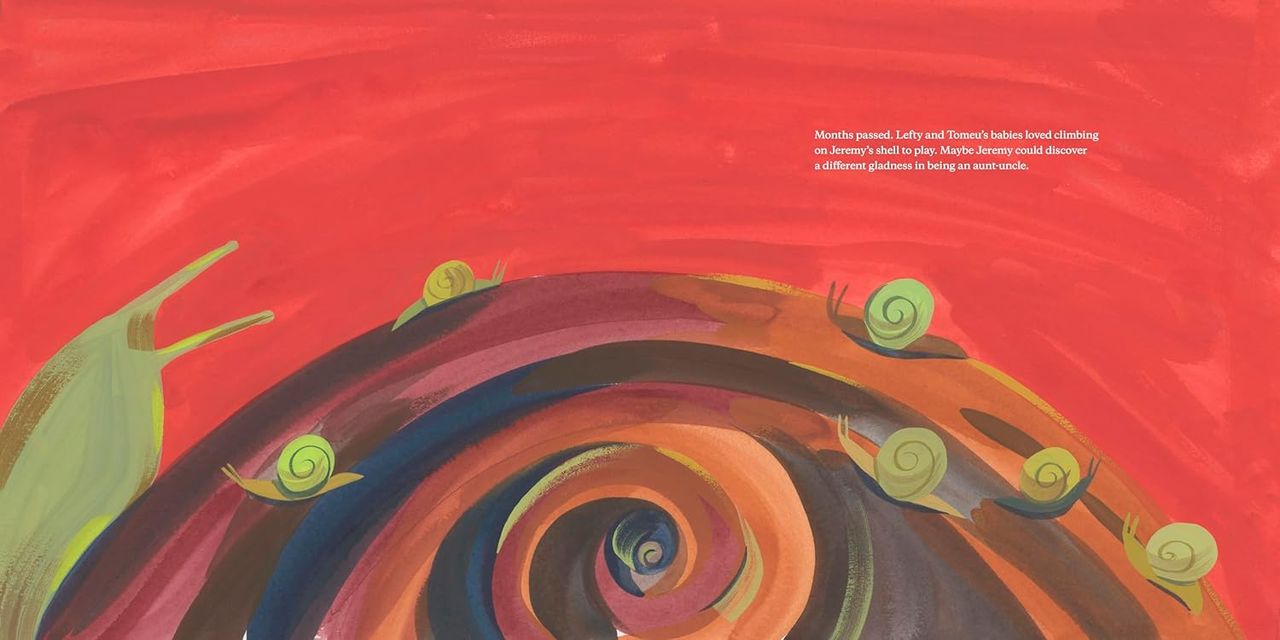
Illustration by Ping Zhu from Popova’s The Snail with the Right Heart: A True Story (2021). (Courtesy Enchanted Lion Books)
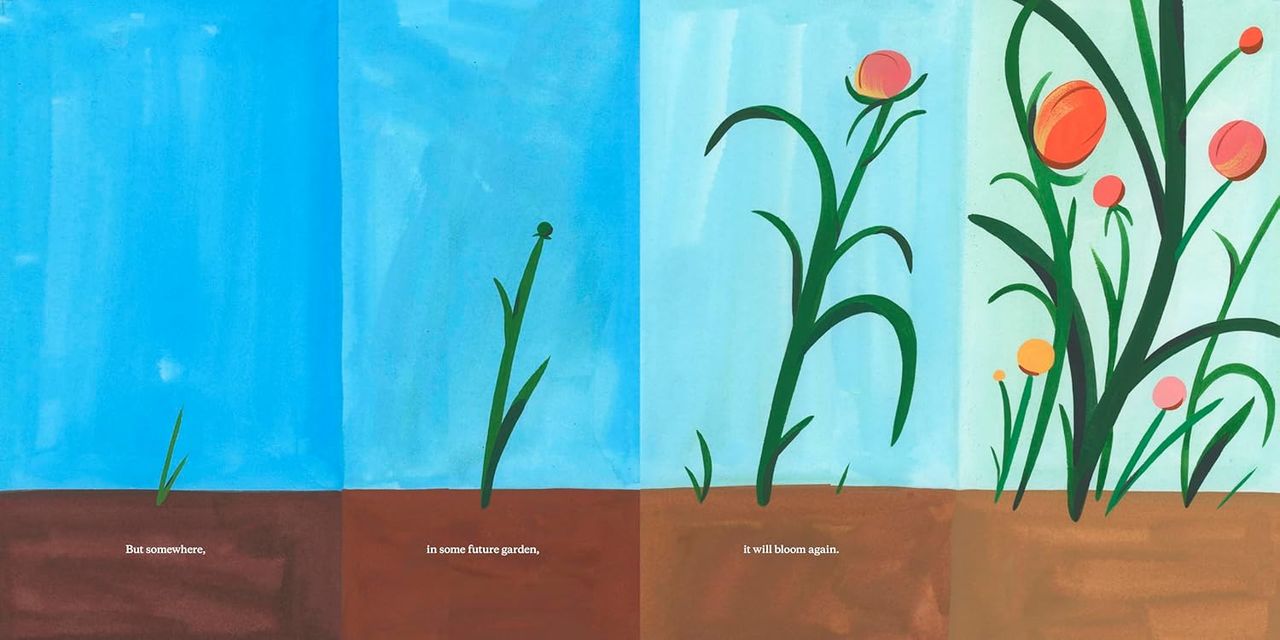
Illustration by Ping Zhu from Popova’s The Snail with the Right Heart: A True Story (2021). (Courtesy Enchanted Lion Books)
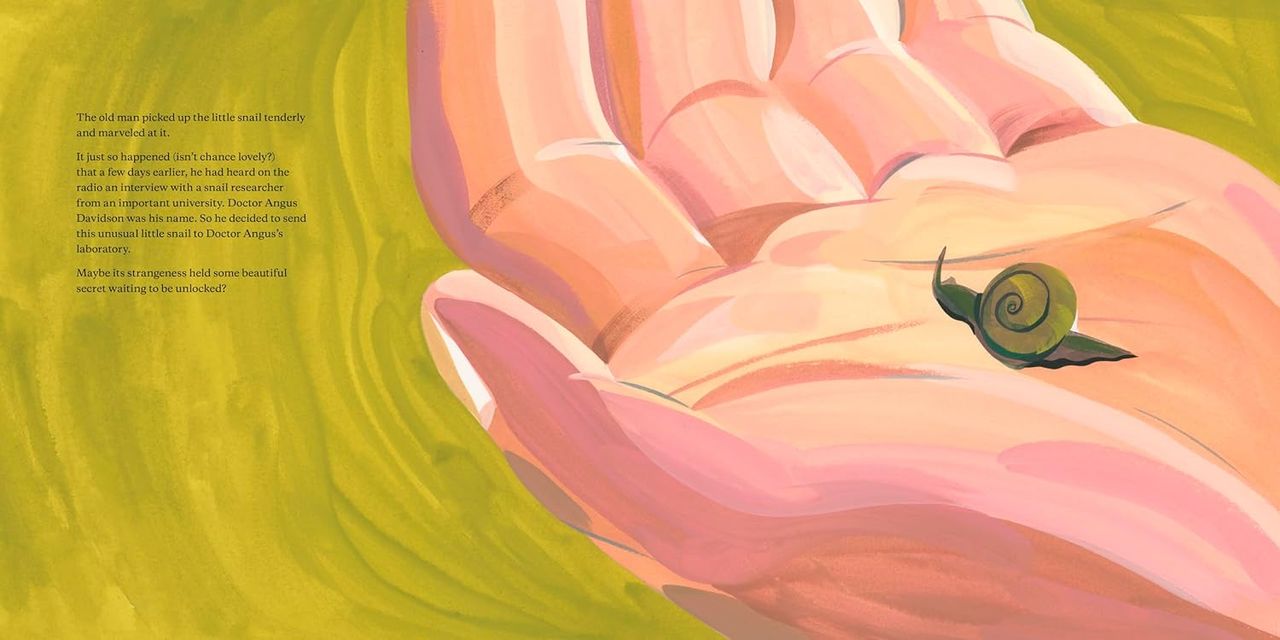
Illustration by Ping Zhu from Popova’s The Snail with the Right Heart: A True Story (2021). (Courtesy Enchanted Lion Books)
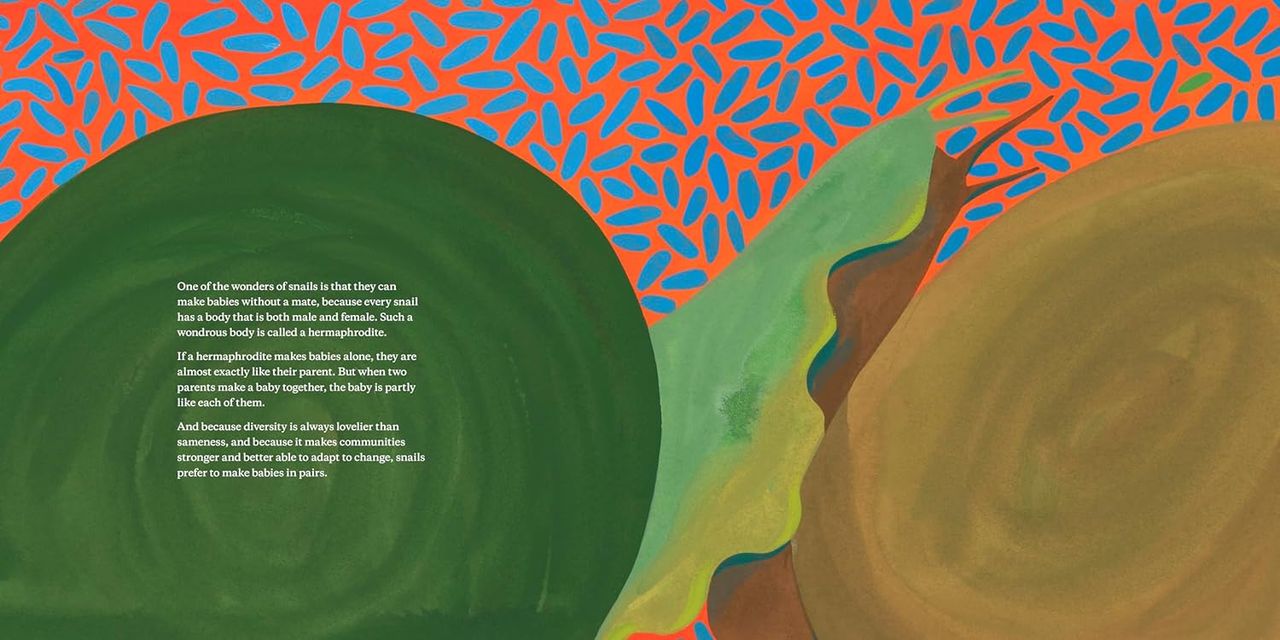
Illustration by Ping Zhu from Popova’s The Snail with the Right Heart: A True Story (2021). (Courtesy Enchanted Lion Books)
Illustration by Ping Zhu from Popova’s The Snail with the Right Heart: A True Story (2021). (Courtesy Enchanted Lion Books)
Illustration by Ping Zhu from Popova’s The Snail with the Right Heart: A True Story (2021). (Courtesy Enchanted Lion Books)
Illustration by Ping Zhu from Popova’s The Snail with the Right Heart: A True Story (2021). (Courtesy Enchanted Lion Books)
Illustration by Ping Zhu from Popova’s The Snail with the Right Heart: A True Story (2021). (Courtesy Enchanted Lion Books)
Illustration by Ping Zhu from Popova’s The Snail with the Right Heart: A True Story (2021). (Courtesy Enchanted Lion Books)
Illustration by Ping Zhu from Popova’s The Snail with the Right Heart: A True Story (2021). (Courtesy Enchanted Lion Books)
Illustration by Ping Zhu from Popova’s The Snail with the Right Heart: A True Story (2021). (Courtesy Enchanted Lion Books)
Illustration by Ping Zhu from Popova’s The Snail with the Right Heart: A True Story (2021). (Courtesy Enchanted Lion Books)
SB: Out of everything in your book, there are these two lines that... Maybe I’m thinking about home or notions of home, but they just stood out to me the most. I paused in my tracks reading them, and they really moved me. I wanted to share them with the listeners and with you: “Sometimes we must go to the end of the world, to the last horizon and past it, to find our way home. Sometimes home is a horizon.”
MP: Mmm. [Pauses] I don’t want to interpret myself. I will say when Sylvia Plath was 17 and her first poem was published and her mother was fretting about what the world would make of it, Sylvia wrote to her and said, “Once the poem is made available, the right of interpretation belongs to the public.”
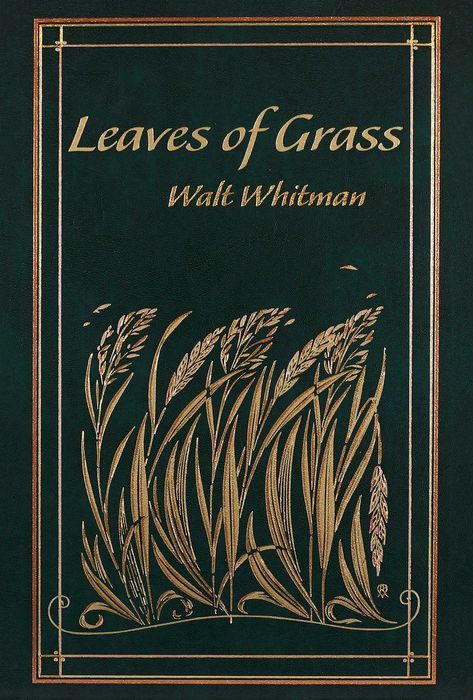
Cover of Walt Whitman’s Leaves of Grass (1855). (Courtesy Canterbury Classics)
SB: Mmm. I feel like we should end our conversation with poetry. I think it makes sense, right? There’s a poem that you include in Traversal. It’s two stanzas—well, several stanzas actually in the book, but I wanted to see if you would read two of the stanzas here. It’s Whitman’s poem “Who Learns My Lesson Complete?” from the original edition of Leaves of Grass, and I’ve printed them out here—
MP: Good rustle of paper.
SB: Yes.
MP: “It is no small matter, this round and delicious globe moving so
exactly in its orbit for ever and ever, without one jolt or the
untruth of a single second,
I do not think it was made in six days, nor in ten thousand years,
nor ten billions of years,
Nor plann’d and built one thing after another as an architect
plans and builds a house.
I do not think seventy years is the time of a man or woman,
Nor that seventy millions of years is the time of a man or woman,
Nor that years will ever stop the existence of me, or any one else.”
SB: Thank you, Maria.
MP: Thank you, Spencer. Thank you, Walt.
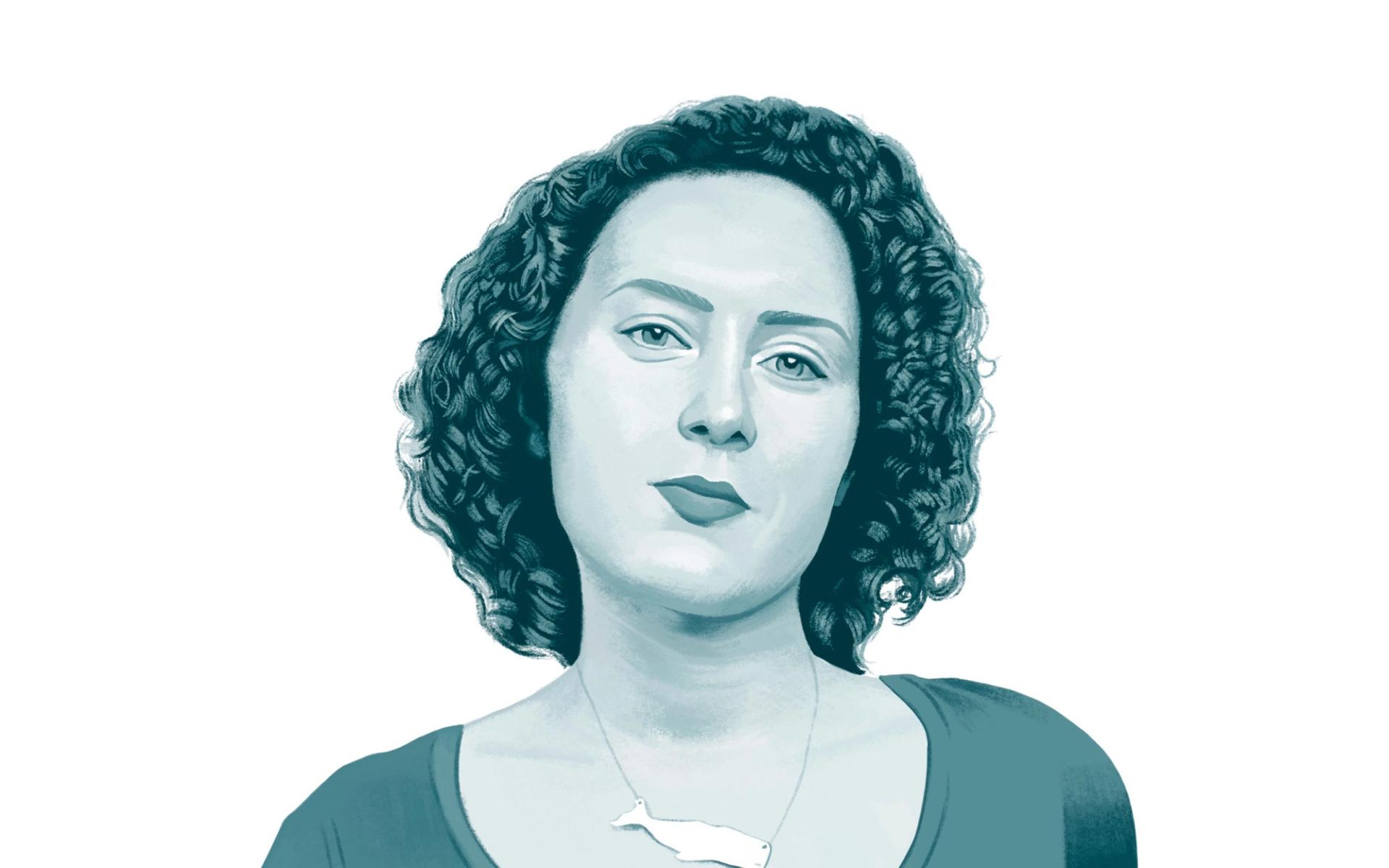
This interview was recorded in The Slowdown’s New York City studio on May 14, 2026. The transcript has been slightly condensed and edited for clarity. The episode was produced by Olivia Aylmer, Ramon Broza, Mimi Hannon, Sam Platt, and Johnny Simon. Illustration by Paola Wiciak based on a photograph by Allan Amato.